Whether you’re a foodie, avid internet-taught nutritionist, or just trying to lose weight, you’ve most likely heard the phrase (or reminded yourself) “it’s not about how much you eat, it’s what you eat.”
Food is a crucial component of daily life. Every living thing relies on sustenance to live. Our earliest ancestors were hunter-gatherers. Over time, humans’ ability to manipulate, manufacture, and mass-produce foods has increased—rapidly. Yet, how can the very means of our survival also be a catalyst for health decline?
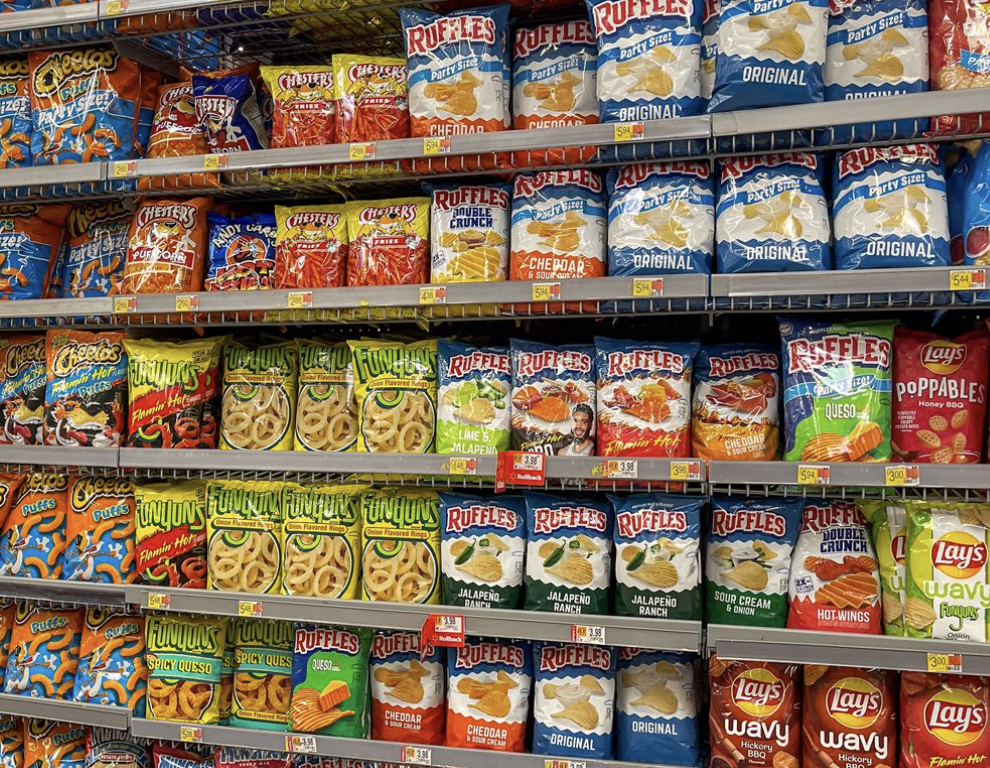
Ultra-Processed Foods is our answer. Ultra-Processed Foods, or UPFs, are, arguably, one of man’s greatest achievements and pitfalls. We’re able to manipulate hundreds of chemical substances at the chemical and physical level into something you’d find on your kitchen counter. We can “extrudate” food with boiling temperatures to mold them into into chips, cookies, breakfast cereals, and chicken nuggets. That’s twenty-first-century biotechnology at its finest—but what about its health implications?
What most people know is that UPFs make people gain weight. While that’s not wrong, it’s certainly not the full story. A diet rich in UPFs is linked to an 80 percent elevated risk of metabolic syndrome (a cluster of conditions that increase risk for heart disease, stroke, and type 2 diabetes). It also increases the risk of cardiovascular death by 66 percent.
And that’s not all. Among the older population, a 10 percent increase of UPF consumption is associated with 16 percent increased risk of cognitive impairment and degeneration. A regular intake of ultra-processed meat—bacon, sausage, and hot dogs, for example—is affiliated with a 14 percent higher risk of dementia. UPF-rich diets have been linked to fatty liver disease, several types of cancers, depression, and inflammatory bowel disease. A recent 62 percent increase in mortality has been connected to consuming over four UPF servings per day.

Clearly, we are in the throes of a food crisis. But what’s been done about it?
Well, the answer is nothing. While countries like Brazil, Israel, Belgium, Chile, and Uruguay have published guidelines for people to not eat UPFs, UPFs continue to comprise over 60% of the average American’s caloric intake. Food additives like brominated vegetable oil have been banned in Japan and Europe. Likewise, Red 3 and potassium bromate were banned by the European Union for their high potential to cause serious health issues.
In the United States, Big Food has a chokehold authority over the Department of Agriculture and the FDA. With the interest of money-making in mind, the powerful, multinational corporations that dominate the food and beverage industry will never condone educating more people about the potential toxicity and dangers of the foods they consume.
Realistically, UPFs aren’t going away anytime soon. But that doesn’t mean we should continue waiting around as mortality rates continue to grow. Various UPF regulations could be enforced to reduce their toxicity. Corporations could begin conspicuously labeling their products to highlights UPF risks. We can take greater strides in promoting educating the American population about the dangers of UPFs.
Next time you open that candy bar, or reach inside your bag of chips, take a second to read the label. I’ll bet you’ll be surprised by what you’re eating.



 Brains for Change
Leave a comment