Recently, I had the opportunity to participate in the Constructive Disagreement Project at the Harvard Kennedy School, a research initiative led by Dr. Julia Minson and Heather Sulejman exploring how people can engage across differences more effectively. At a time when polarization often dominates our civic discourse, the idea that disagreement itself could be a tool for understanding rather than division felt both radical and necessary.
During the session, we explored how emotion and identity can override logic, how confirmation bias shapes our perception of “truth,” and how empathy rewires conversations that might otherwise fracture. We also learned about the H.E.A.R. framework—Hedging your claims, Emphasizing Agreement, Acknowledging the opposing argument, and Reframing to the positive—which allows people to effectively have productive disagreements and find common ground without hostility. I also had the chance to test an AI model named Riley, designed by the project’s researchers to simulate real-world disagreements and measure constructive engagement. It was fascinating to see how human insight and artificial intelligence could work together to better understand why certain conversations escalate and others open pathways to cooperation.
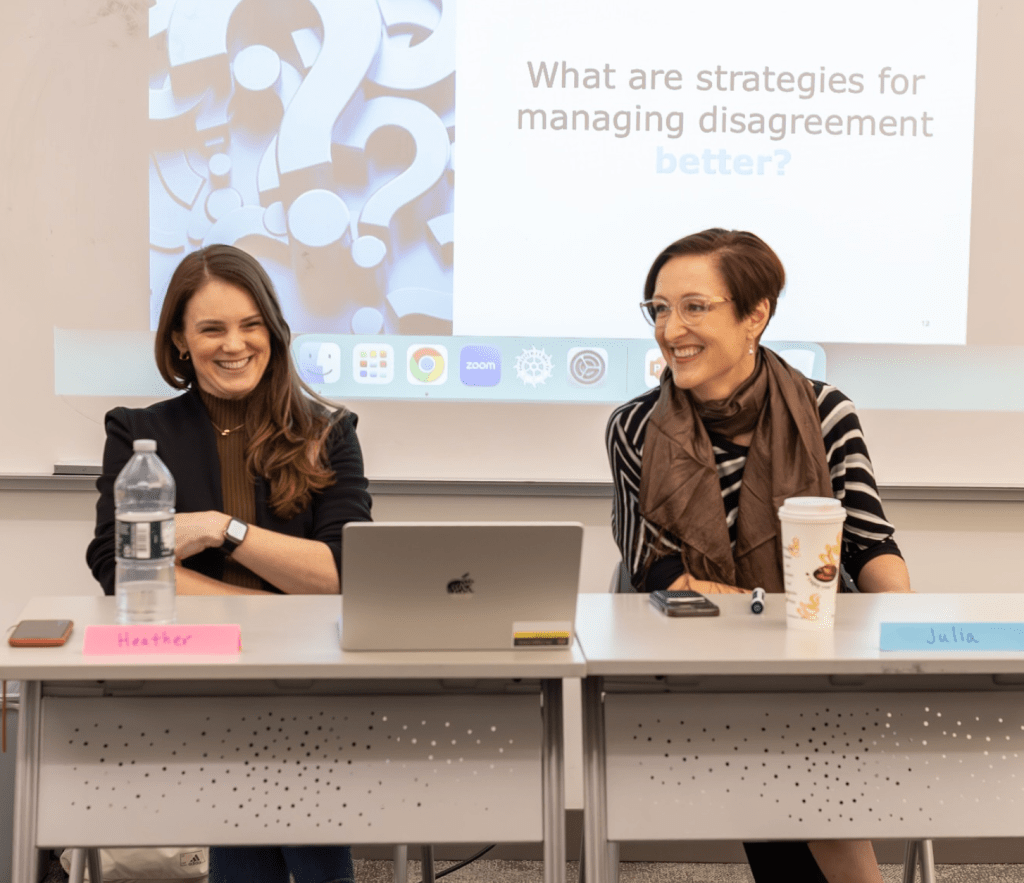
Image source: The Chapin School
Constructive disagreement, I learned, is not about avoiding conflict; it’s about navigating it productively. It requires curiosity, humility, and a willingness to be wrong. In many ways, it mirrors the principles that drive effective policymaking: listening deeply, challenging assumptions, and valuing progress over polarization.
As someone passionate about public policy and neuroscience, I found that the project connected both worlds. On one hand, constructive disagreement is a civic skill that underpins democracy itself. On the other hand, it reflects the cognitive mechanisms of empathy, reasoning, and emotional regulation—core aspects of human behavior that neuroscience continues to uncover.
If we can train our brains to disagree more constructively, perhaps we can also rebuild the trust and cooperation that effective policy demands. The intersection of science and civics is where I believe real change begins, and this experience at Harvard reminded me that progress isn’t just about having the right answers, but about asking better questions together.
 Brains for Change
Leave a comment