This week, I read a fascinating research review on the role of bilingualism in aging and cognitive reserve. Cognitive reserve refers to the brain’s ability to maintain function in the face of age-related changes or pathology. Rather than being a passive process, reserve is built through sustained, effortful engagement: whether that’s education, challenging work, social complexity, or creative pursuits. What intrigued me was that life-long bilingualism, the consistent use and control of two languages, might be one of those reserve-enhancing experiences that helps older adults maintain cognitive function longer into their later decades.
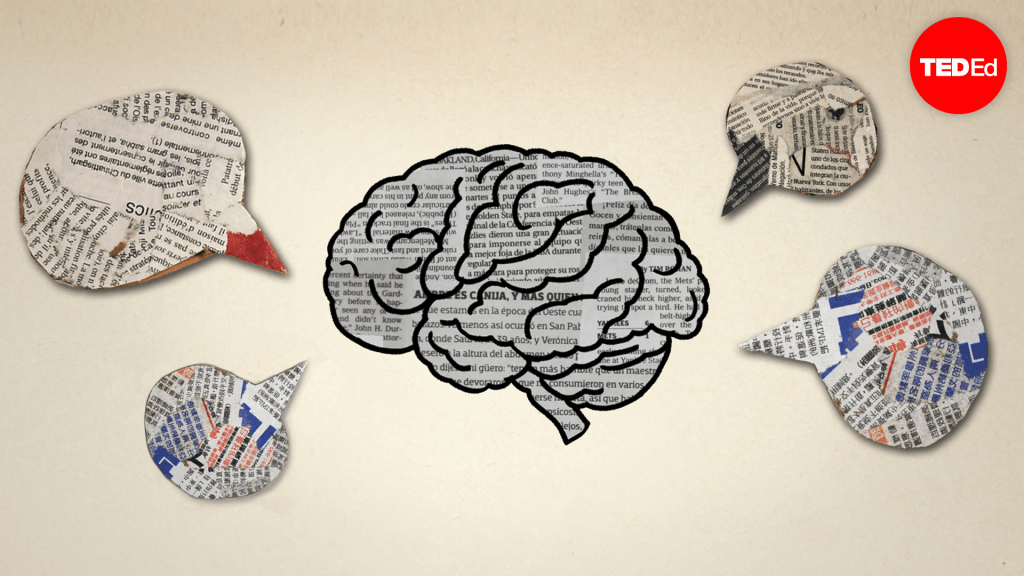
Image Source: TEDTalks
At first glance, the idea seems deceptively simple: many people around the world grow up speaking multiple languages, or learn them later in life. But from a neuroscientific perspective, managing multiple language systems isn’t trivial. Each language has its own phonetic rules, vocabulary, and patterns. Switching between them requires constant attention, inhibition of one language while activating another, and real-time conflict monitoring: all functions associated with executive control in the brain. Bilingual individuals exercise these networks daily, which may strengthen and preserve them over time.
Neuroimaging and behavioral studies suggest that bilingualism supports cognitive reserve by engaging broad neural systems involved in attention, memory, and executive functioning, systems that often decline with age. Some studies even indicate that bilingual individuals may show delayed onset of cognitive symptoms in the context of neurodegenerative diseases, not because their brains resist damage, but because they’re better able to compensate for it.
Importantly, this line of research also highlights a subtle but powerful point: it’s not merely knowing two languages that matters; it’s the continuous use, management, and switching between them that seems to build reserve. This distinction echoes a broader theme in aging research: that engagement with effort and purpose is more protective than passive recreation alone.
This insight resonates deeply with the kinds of programs I care about most. Whether through music, rhythm exercises, storytelling, or language, what appears to matter most for brain health is not niche skill or talent, but meaningful activation of the mind. The scaffolding of cognitive reserve is not built by ticking boxes; it’s built by sustaining curiosity, complexity, and challenge throughout life.
Of course, bilingualism is not accessible to everyone, and the evidence is still evolving. Differences in language proficiency, context of use, and cultural factors all shape outcomes, and not every study finds uniform benefits. But as a window into how lived experience shapes the aging brain, the bilingualism literature underscores a broader truth: our brains thrive when they’re used in rich, demanding, and socially embedded ways.
The neuroscience is clear enough to demand we rethink simplistic notions of aging as an inevitable decline. Aging is not uniform, and the trajectory of cognitive change is shaped by the lifelong habits we cultivate: habits that challenge us, connect us, and require us to show up as active participants in our own lives.
That’s a challenge worth taking.

 Brains for Change
Leave a comment