This week, I read a New York Times article that made me pause and reconsider the fragile infrastructure behind scientific discovery. The piece follows Will Mair, whose lab studies the biology of aging, and whose research program was abruptly disrupted by sweeping federal funding cuts. What stood out wasn’t just the scale of the loss, but how suddenly it unfolded—active, productive research halted midstream.
At first glance, it reads as a story about institutional conflict and funding politics. But underneath that is a deeper tension: the dependence of long-term scientific progress on systems that can shift overnight. Aging research, in particular, requires continuity. Experiments run over months or years. Biological processes unfold gradually. When funding disappears, it doesn’t just pause discovery—it can erase it, severing timelines that cannot easily be rebuilt.
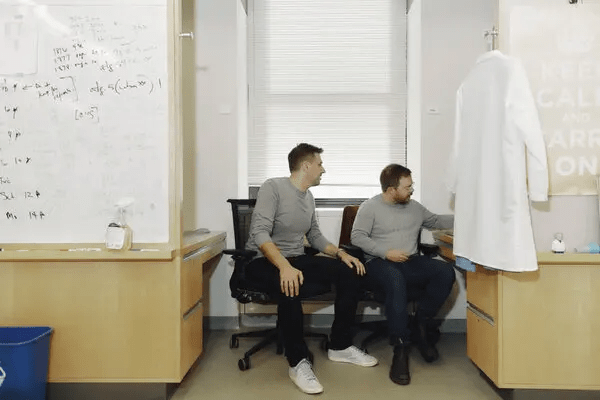
Image source: New York Times
In a field like aging biology, where interventions often aim to delay or prevent decline rather than reverse it, the stakes of disruption are especially high. Much of this work—whether studying metabolic pathways, mitochondrial function, or organismal lifespan—builds incrementally, layering insight over time. Losing that continuity risks slowing progress not just by months, but by years.
Policy conversations about science funding often center on budgets, appropriations, and institutional priorities. Those matter deeply. Stories like this, however, reveal something more fundamental: that the future of medicine depends not only on breakthrough ideas, but on the stability of the systems that allow those ideas to develop.


 Brains for Change
Leave a comment